Need sewer line repair services in Buffalo?
Tell us what is happening and where. We will point you to an independent provider in our network. No obligation to hire.
No obligation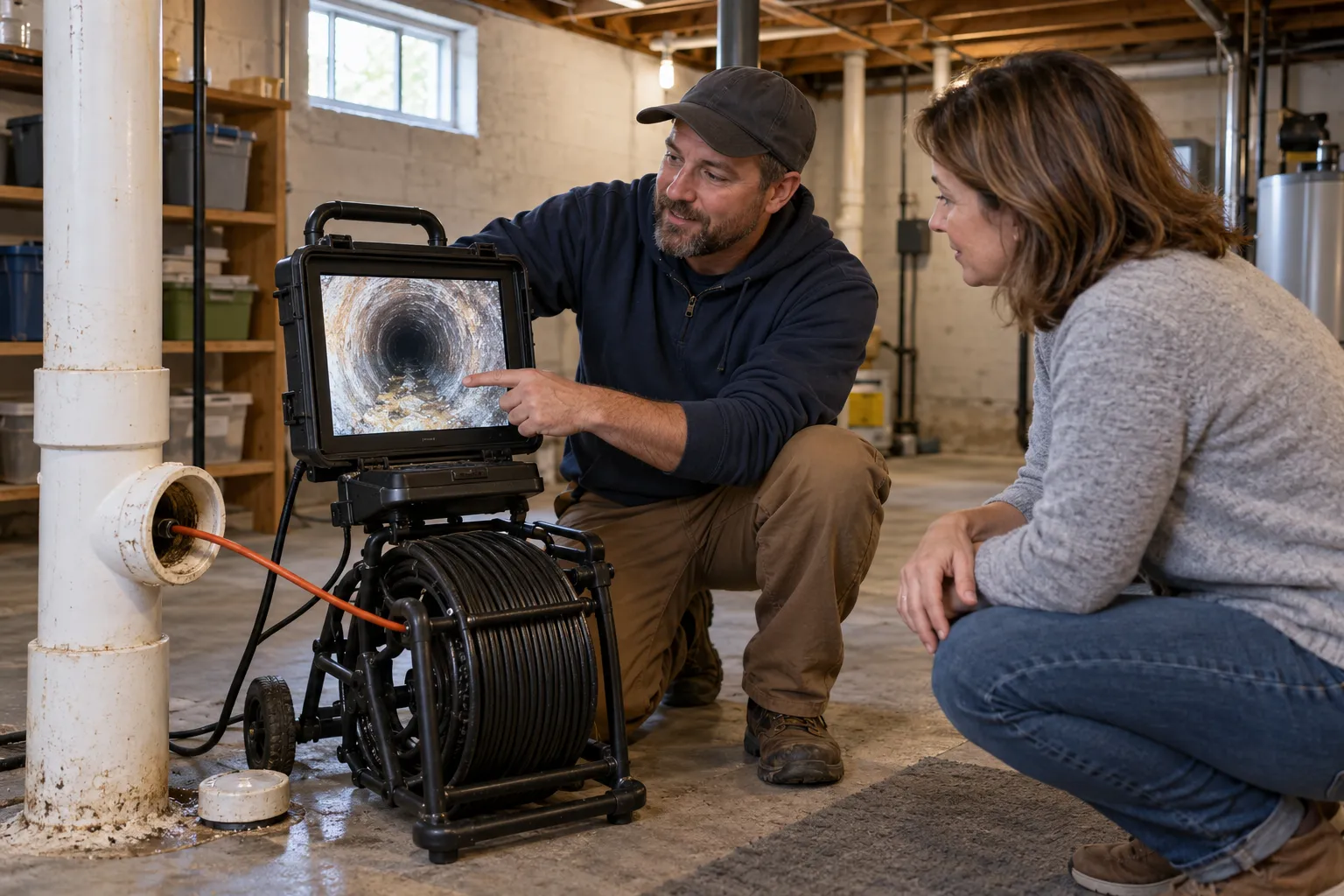
Say you notice every drain in the house is slow, and the basement smells like a swamp. That is often a main sewer line asking for help. It is the pipe that carries all your waste out to the street or septic system. When it fails, the mess has nowhere to go but back into your home.
Arcfantasy Plumbing is a referral service. We do not do the repairs. We explain the first hour in plain steps, then connect you with an independent provider in our network who handles sewer line repair near you. You get less searching and fewer phone tabs. You request an estimate, ask your questions, and decide. There is no obligation to hire anyone.
Say you flush the toilet and hear a gurgle from the shower. Then dark water creeps up the basement floor drain. Stop right there and take a breath. A steady first hour makes a big difference.
Sewage carries germs. Keep kids and pets away from the wet area. Do not walk through it barefoot. If water is near outlets or the electrical panel, stay out and leave the power alone until a pro says it is safe.
Pause the laundry. Skip the dishwasher and long showers. Every drop you add has nowhere to go but back up through the drain at the bottom of the house, which in a full basement is often right on your floor.
Request a callback to check provider availability in the Buffalo area. Many providers can respond quickly to a backup, but hours vary.
Sometimes the warning comes early. Catching it then keeps a small problem small.
One slow sink is usually a local clog. When the tub, toilet, and laundry all slow down together, the main line is the likely cause.
Glugging sounds after a flush and a sewer odor in the basement or yard are classic clues. Air is being pushed around a blockage.
A soggy patch in the lawn, or a dip over the pipe path, can mean a crack or break underground. Green, lush grass in one strip can point the same way.
Most sewer trouble builds slowly. A few causes show up again and again.
Roots hunt for moisture. They slip into tiny joints, then grow into a thick mat that catches paper and grease.
Cold winters and thaw cycles shift soil around pipes. Spring snowmelt and coastal storms then flood the ground and add more stress to weak spots.
Older homes, including many multi-family houses and Cape Cod style homes, may have clay, cast iron, or fiber pipe. These materials crack, flake, or sag with age.
A provider will often start with questions. Which drains are slow? When did it begin? Then comes a camera inspection. A small camera on a flexible cable travels through the line and shows cracks, roots, sags, and breaks on a screen.
The provider can also mark where the problem sits and how deep it is. That picture helps you compare options with a written quote in hand.
If roots or buildup cause the blockage, the line may only need to be cleared. That can buy time, but the cause still needs a look.
When only one section is broken, a provider may dig a small area and replace just that piece.
Some pipes can be lined from the inside, which may mean less digging in the yard. It does not suit every pipe, so ask if it fits yours.
A badly collapsed or sagging line may need a new pipe. This is the biggest job, but it can settle the problem for years.
Part of the line may run under your yard, and part under the street. Who owns which section depends on your town, so ask your local office before work starts. Many sewer repairs need a permit, and a provider can often explain the steps. Stone and block foundations can also complicate where a pipe enters the house, so mention yours.
You are in charge here. Ask clear questions before you say yes.
Some policies may cover sudden damage, but gradual wear is often excluded. Check your policy. Providers can often help document damage for a claim, so take photos before anything is cleaned up.
Say you notice a faint odor and slow drains in early spring. You could wait and hope. Or you could request an estimate now, while the fix is still small and the yard is soft enough to work in. The second choice usually costs less sleep and less money.
A small camera shows cracks, roots, and sags inside the line so the problem is clear.
Providers can clear roots and buildup from the main line to restore flow.
A single broken section can often be replaced without digging up the whole line.
Badly damaged lines may be lined or replaced, depending on the pipe and the yard.
Sewer work varies a lot by pipe depth, length, and yard access. These are typical U.S. ranges only. Always get a written quote that names the method and everything included before work starts.
| Service | Typical range | Notes |
|---|---|---|
| Camera inspection | $150 – $500 | Shows the cause before you choose a repair |
| Main line clearing | $200 – $600 | Roots or buildup; may return if pipe is damaged |
| Spot repair | $1,500 – $4,000 | Depends on depth and digging needed |
| Pipe lining | $80 – $250 per foot | Less digging; not right for every pipe |
| Full line replacement | $3,000 – $25,000 | Length, depth, and surface repair drive price |
| Permit fees | $50 – $500 | Varies by town and job |
Keep people and pets away from backed-up water and stop using sinks, tubs, toilets, and laundry.
Take photos and jot down which drains are affected and when it began.
Call or send a request so an independent local provider can check availability.
Compare the repair method, price, and permits, then choose what suits you.
One place to reach an independent provider instead of many phone tabs.
Plain steps help you stay safe and steady during a stressful first hour.
Providers in our network know local pipes, older housing, and cold-weather ground issues in your area.
Request an estimate, ask questions, and choose for yourself. Hiring is always your decision.
Tell us what is happening and where. We will point you to an independent provider in our network. No obligation to hire.
No obligationCommon signs are several slow drains at once, gurgling after flushes, sewer smells in the basement or yard, and wet or sunken spots on the lawn. A camera inspection can confirm what is going on underground.
Typical U.S. costs range from a few hundred dollars for clearing to several thousand for a spot repair, and more for full replacement. Depth, length, and yard access change the price, so ask for a written quote.
Some policies may cover sudden damage, but wear and tear and root damage are often excluded. Check your policy and ask your agent. Providers can often help document damage for a claim.
Tell us what is happening and where. We will point you to an independent provider in our network. No obligation to hire.
No obligation